Myanmar Earthquake Response_1 year Impact Report
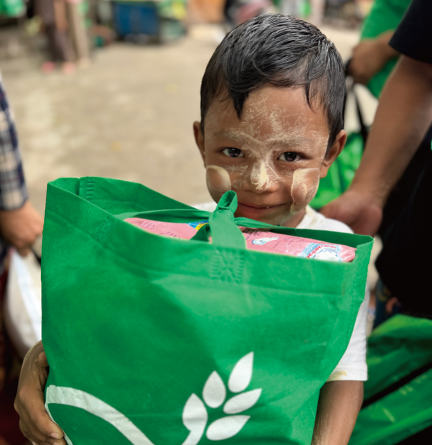
On March 28, 2025, a 7.7 magnitude earthquake struck Myanmar, causing widespread devastation. In response, we deployed emergency teams within 48 hours and have continued relief and recovery efforts over the past year.
Emergency Response & Reach
• Total Beneficiaries: 109,854
• Total Funding: $835,927
• Rapid deployment within 48 hours
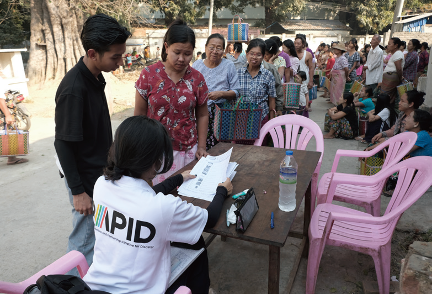
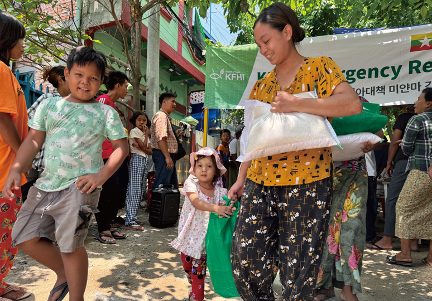
Key Areas of Support
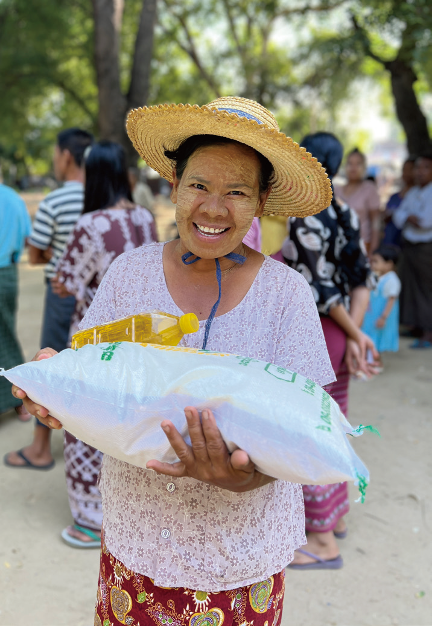
Food Assistance (65,249): Essential food supplies distributed to affected families.
Non-Food Items (35,950): Hygiene kits, household items, and school supplies.
Shelter (2,566): Temporary shelters and home repairs.
Education (189): School reconstruction and safe learning spaces.
Hygiene (5,750): Water systems and sanitation support.
Spiritual Care (150): Church rebuilding and community restoration.
Thank You
Thanks to the support of 1,914 individual donors, 156 churches, and multiple partners, we continue to restore communities and build sustainable futures in Myanmar.
Prayer Letter from Secretary of General, Seung-ho Chung (Jan 10.2026, Sri Lanka)
Urgent Relief Efforts on the Frontlines
I ask for your urgent prayers for our mission field. For over a month, Sri Lanka has been devastated by relentless heavy rains. In the highlands, massive landslides have occurred, while the lowlands are submerged under severe flooding.
Homes, farmlands, and roads have been destroyed or washed away. Currently, more than 860 people are dead or missing, and over 250,000 survivors have lost their homes and become refugees.
The Kandy region, where our partner missionary serves, is facing a flood unprecedented in its thousand-year history. Furthermore, the mountainous Tamil villages—where the KAFHI (Korean American Food for the Hungry International) Sri Lanka branch operates—are experiencing a disaster not seen in a century. The local people are in a state of utter despair.
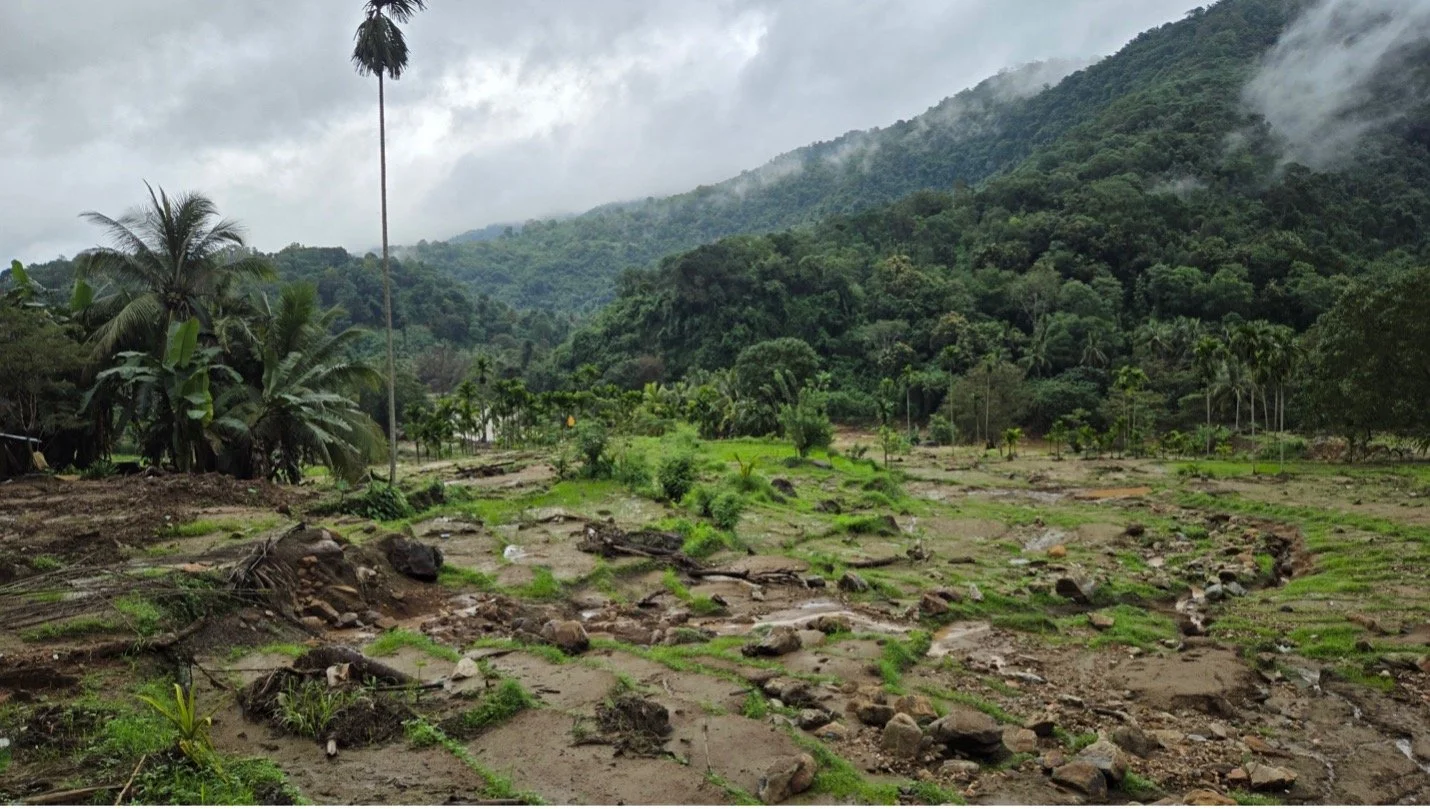
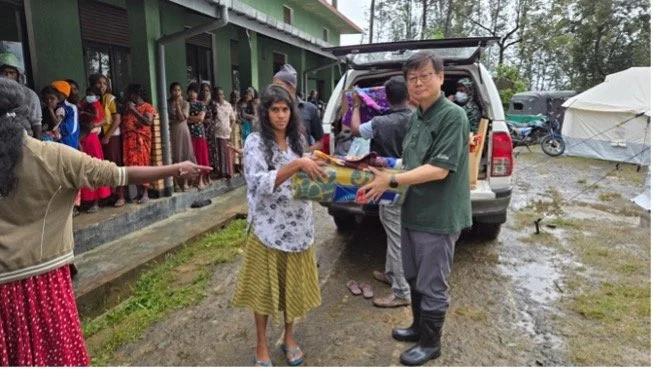
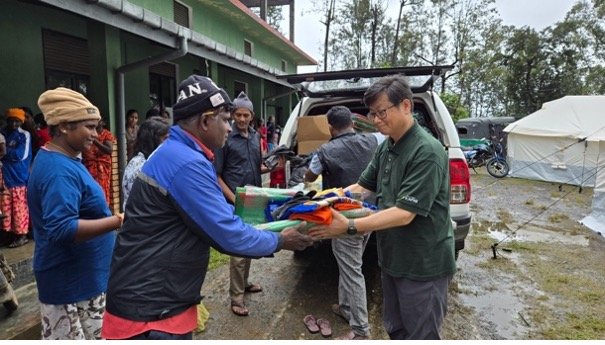
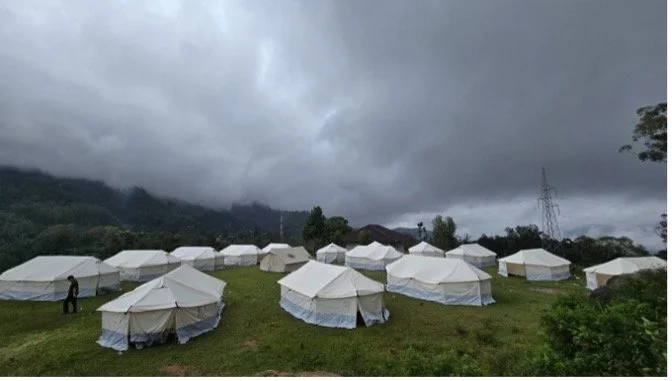

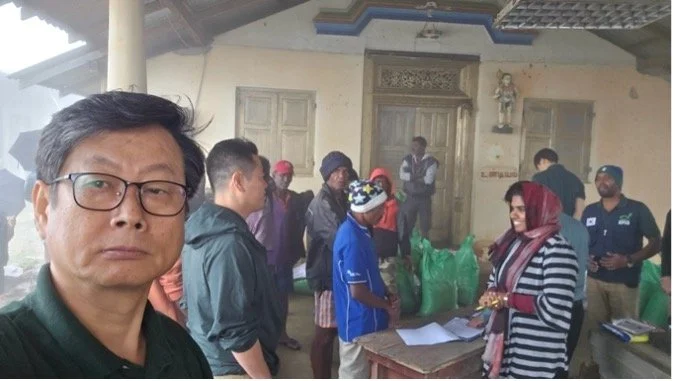
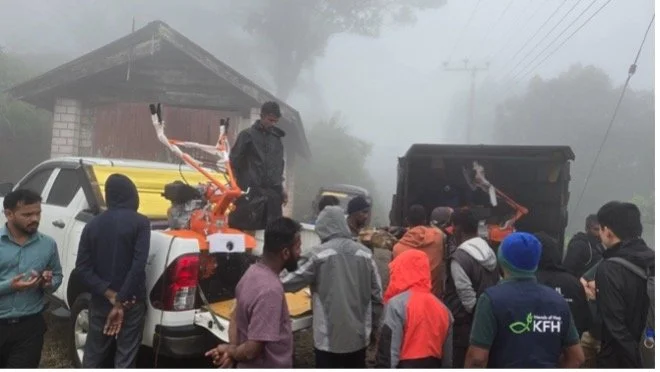
"The scene of the flood is even more devastating than the photos show."
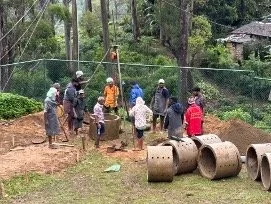
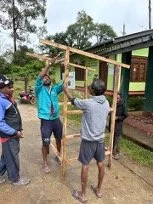
"This is a photo of the toilet construction in the refugee camp."
In the affected areas, collective living conditions have led to an outbreak of waterborne diseases, including skin infections, severe colds, and diarrhea. To prevent further spread, the supply of clean water and sanitary toilets is absolutely critical. We are currently constructing toilets in tent villages and will soon begin work on wells.
Please pray for the following:
That through this process, God would open the hearts of the local people to hear the Gospel.
That the love of Jesus Christ would be clearly revealed through the relief work of KAFHI.
— Secretary of General Seung-ho Jung —
Situation Report - Sri Lanka
1. Situation Overview
Since late November 2025, South and Southeast Asia have been directly impacted by severe monsoon rains and a succession of tropical cyclones. This has resulted in large-scale flooding and landslides, centered in Sri Lanka, Indonesia, Thailand, and Malaysia. To date, more than 1,700 deaths have been confirmed, along with the destruction of major infrastructure and the flooding of numerous cities.
2. Progress and Damage Status in Sri Lanka
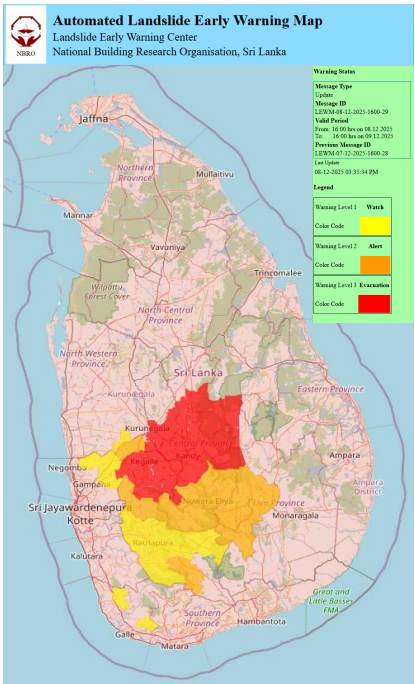
Timeline of Events
- Nov 25: Rainfall begins across Sri Lanka.
- Nov 27: Flood warning issued for the Badulla region; landslides occur and communication is cut off.
- Nov 28: Korea American Food for the Hungry International (KAFHI) begins emergency response.
- Nov 29: Affected areas expand; field visits and initial assessments of marginalized areas conducted.
- Nov 30: Displaced persons camps established and relocation completed.
On November 25, 2025, Cyclone Ditwah passed through Sri Lanka, bringing record rainfall and strong winds that caused nationwide flooding and landslides. According to the Sri Lanka Disaster Management Centre (DMC), as of January 4:
- Deaths: 644
- Missing: 175
- Displaced Persons: 2 million
- Houses Totally Destroyed: 6,056
- Houses Partially Damaged: 112,521
Landslides were concentrated in the central and inland highlands, including Badulla, Kandy, and Nuwara Eliya, causing heavy casualties. Some areas remain isolated as major roads and bridges were buried or washed away. Basic survival conditions have deteriorated significantly due to road loss and power outages. According to the DMC's landslide early warning report released on December 8, the Badulla region (where KAFHI projects are located) is classified as a Level 2 (High Risk) area out of 3 levels, meaning the possibility of additional landslides persists.
Infrastructure paralysis is widespread, and areas with slow recovery speeds are difficult for rescue teams to access. There are concerns regarding the spread of waterborne diseases due to contaminated water sources and debris. With schools and health facilities flooded, the risks for vulnerable groups have increased. Sri Lankan authorities have evaluated this as the most extensive and significant natural disaster to hit the country in decades.
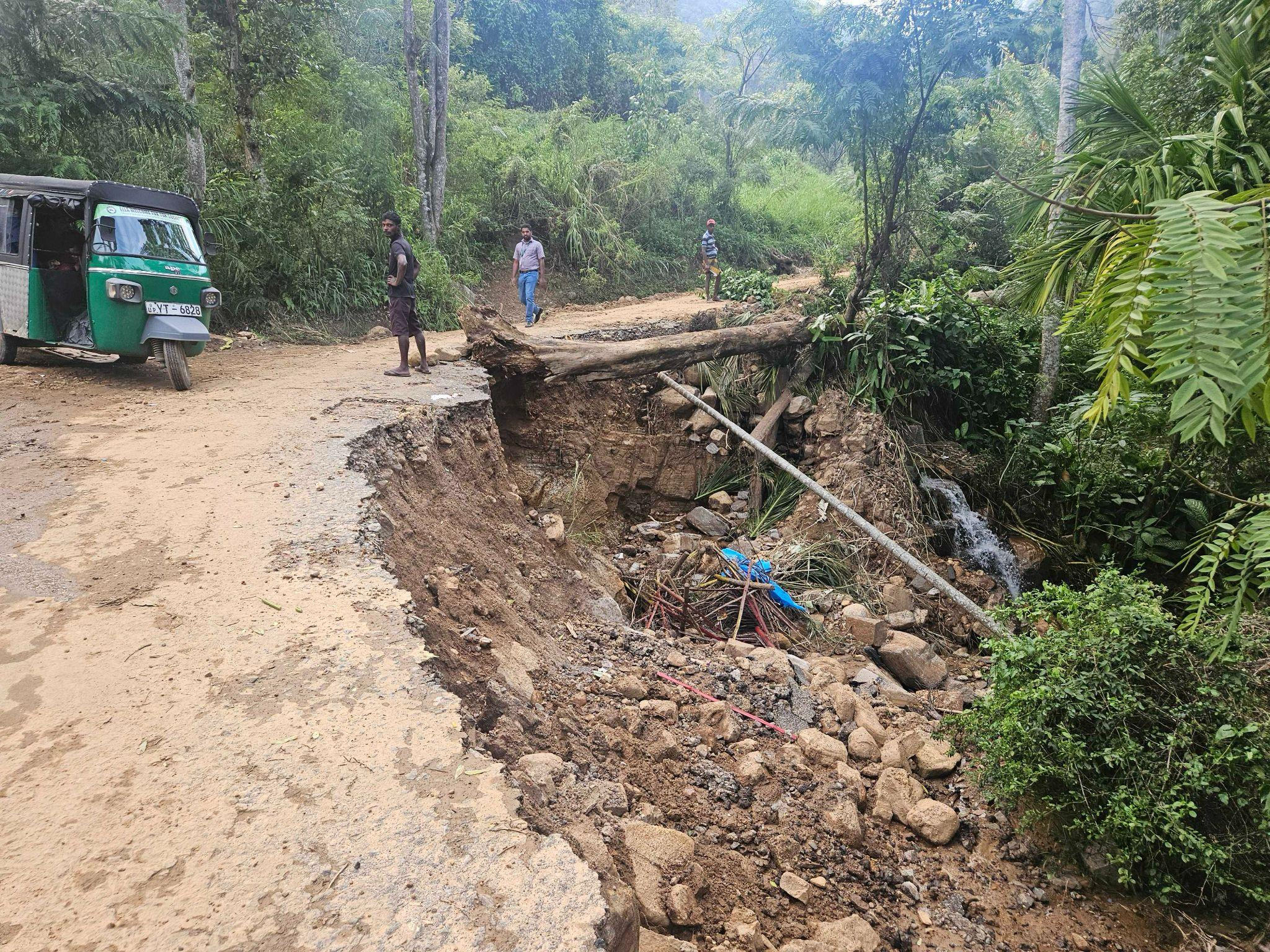
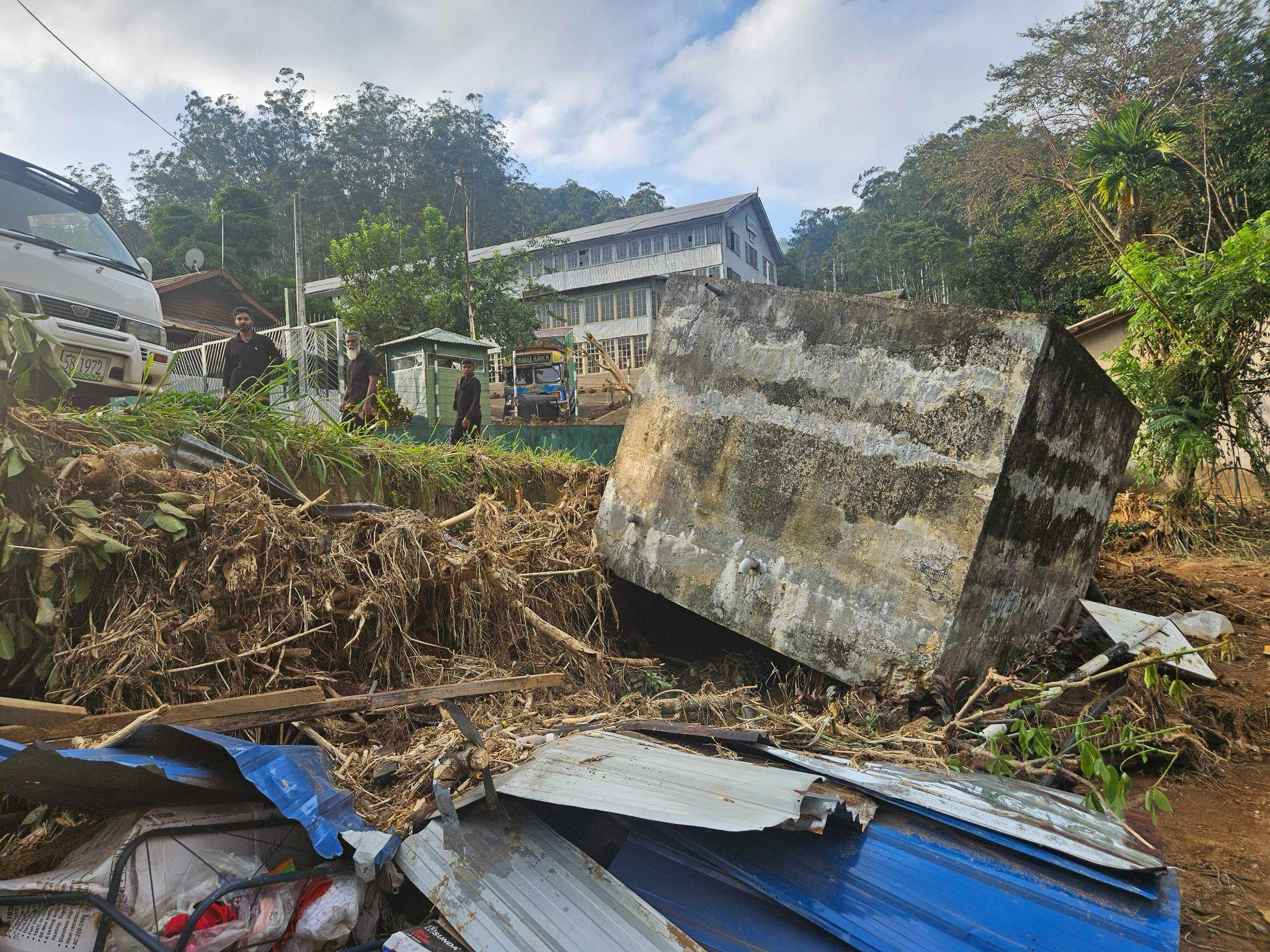
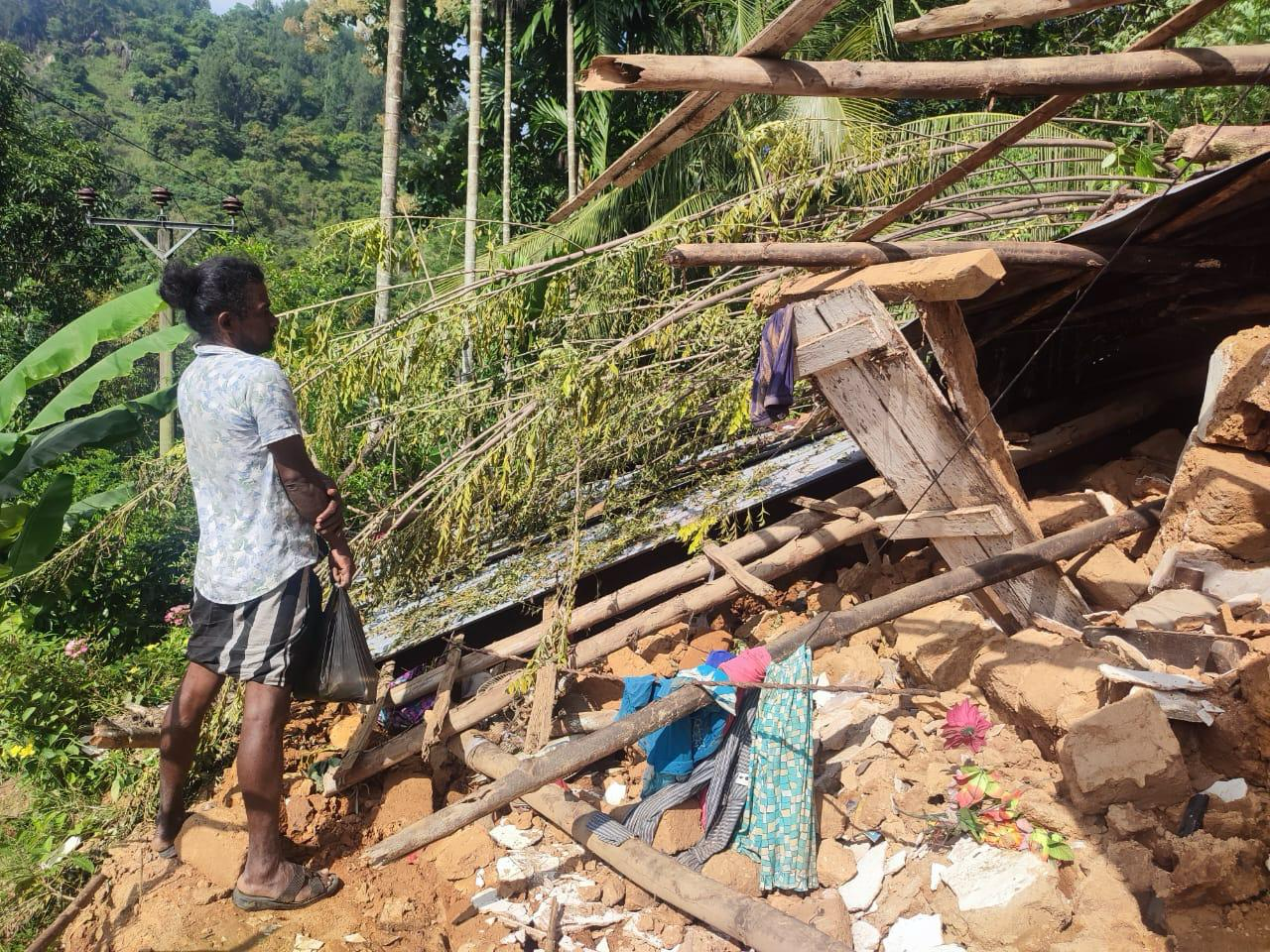
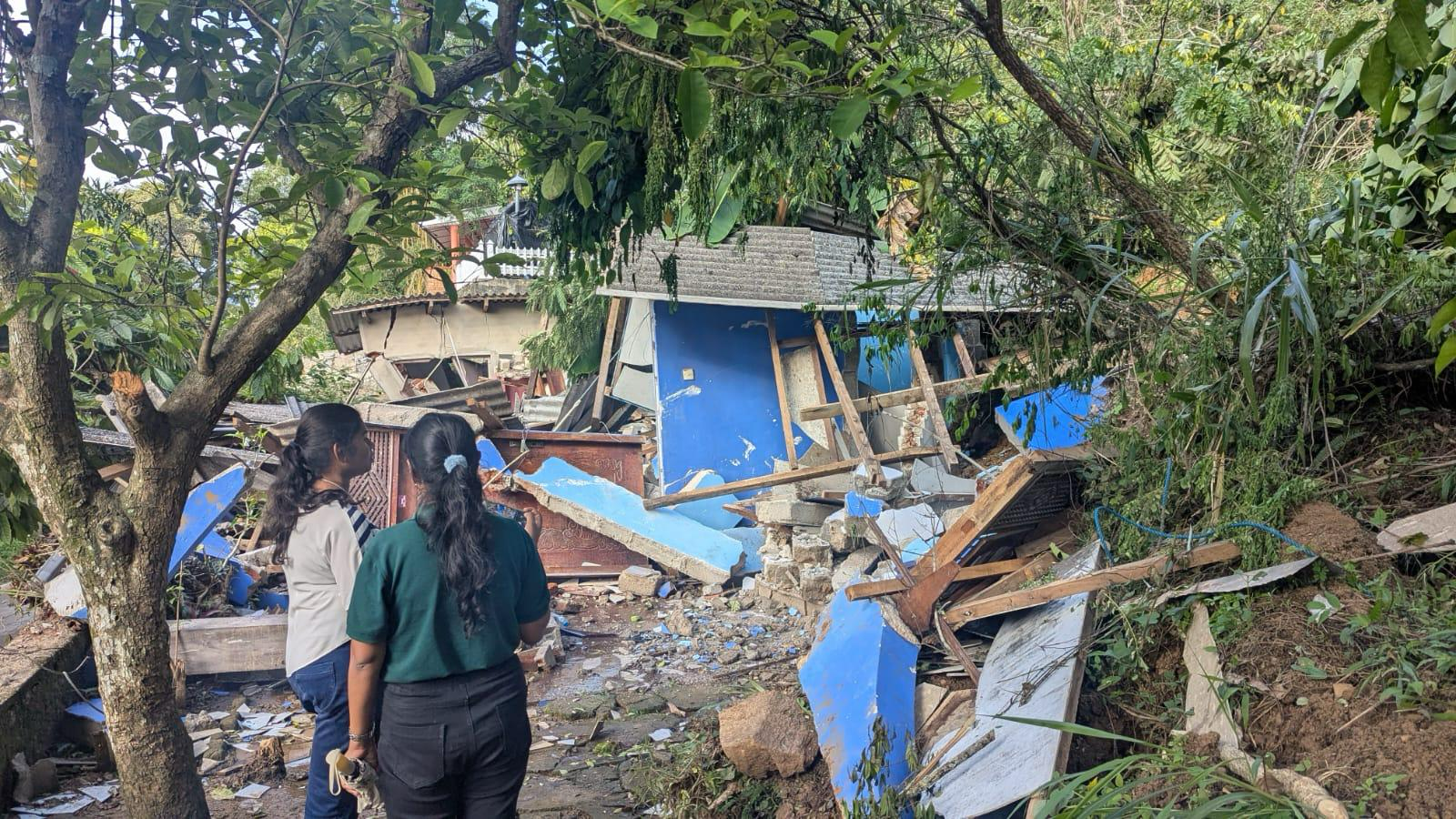
Landslide-stricken area
3. Response from the Sri Lankan Government and the International Community
Immediately following the landfall of Cyclone Ditwah, the Sri Lankan government activated the National Emergency Response Mechanism, centered around the National Disaster Management Centre (DMC). Military, police, fire services, and local government personnel have been extensively deployed to carry out rescue and relief operations. In particular, Special Rescue Teams (SAR), engineering corps, and heavy machinery have been prioritized in the Sabaragamuwa, Kandy, and Badulla regions, where a series of large-scale landslides occurred, focusing on searching for missing persons, securing roads, and accessing isolated areas.
The Sri Lankan government has decided to provide 120,000 KRW (equivalent) to every household that suffered housing damage, regardless of the extent of the loss. Additionally, funds for purchasing school supplies were to be distributed by the end of December to school-aged children. Furthermore, the government decided to provide three months of rent support for those moving from temporary shelters to safe zones, which is expected to lead to a significant migration of the displaced population from shelters to other regions.
On November 29, determining that the scale of the damage exceeded national response capacities, the government officially activated the EU Civil Protection Mechanism (EUCPM). Through this, they requested international assistance, including rescue equipment, boats, and medical supplies. European nations and the UN system have since commenced consultations for initial response efforts. In response, Germany pledged shelter materials, while Italy expressed its intention to provide technical support.
The international community is also expanding its response from the early stages. The IOM is providing non-food items (NFIs), shelter materials, and other essential relief goods on the ground, working in close coordination with the Sri Lanka DMC, UN agencies, and international partners.
At the request of the Sri Lankan government, the U.S. government has dispatched military personnel to support relief activities. The South Korean government has decided to provide a total of $1.5 million in humanitarian aid ($500,000 each) to support the response and early recovery from flooding and landslide damage in three South and Southeast Asian countries (Vietnam, Thailand, and Sri Lanka).
4. KAFHI Response Status
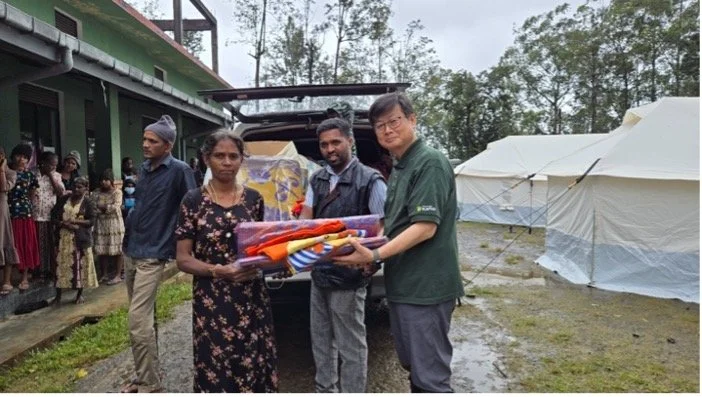
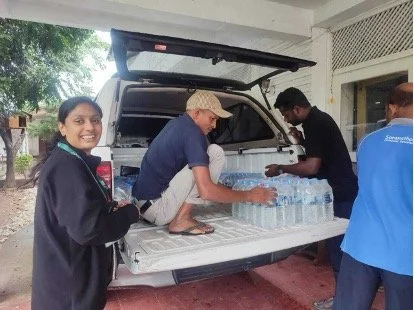
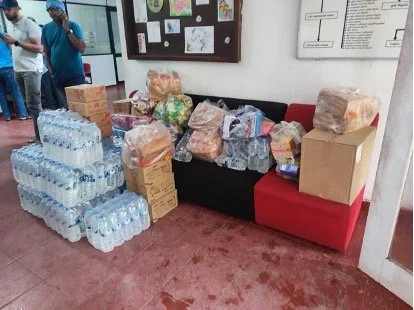
In response to requests from the Badulla local government and the needs of local residents, KAFHI has provided emergency packages including food and water, along with hygiene kits, to affected households. Furthermore, KAFHI has completed support for clearing landslide debris and securing access roads by providing emergency recovery equipment, such as chainsaws and fuel for heavy machinery.
In addition, an emergency relief fund totaling 20 million KRW has been allocated to support the survival and early recovery of 600 households (approximately 2,400 direct beneficiaries) affected by the recent cyclone and landslides. This initiative is expected to minimize gaps in assistance by providing essential supplies for survival and improving the living environments of displaced persons, while also offering tailored daily necessities for vulnerable groups, including infants, children, and the elderly. This effort aims to enhance the safety and hygiene standards of life within the shelters.
As part of the support for early return and recovery, KAFHI plans to promote community-based recovery activities to encourage resident participation in managing the disaster situation. Support for educational facilities will also be provided through inspections and minor repairs of school buildings and facilities to facilitate the resumption of learning. Furthermore, providing kitchenware and food to families returning home is expected to contribute to the early settlement and livelihood stability of the displaced population.
Target Areas and Beneficiaries
- Primary Areas: Soranathota Administrative Division and Welimada Village within the Badulla district.
- Direct Beneficiaries: 600 households (approximately 2,400 individuals), including displaced families living in shelters and vulnerable households such as the elderly, persons with disabilities, women, and childrens.
- Indirect Beneficiaries: All residents of the local community who utilize the restored pedestrian paths, schools, and regional infrastructure.
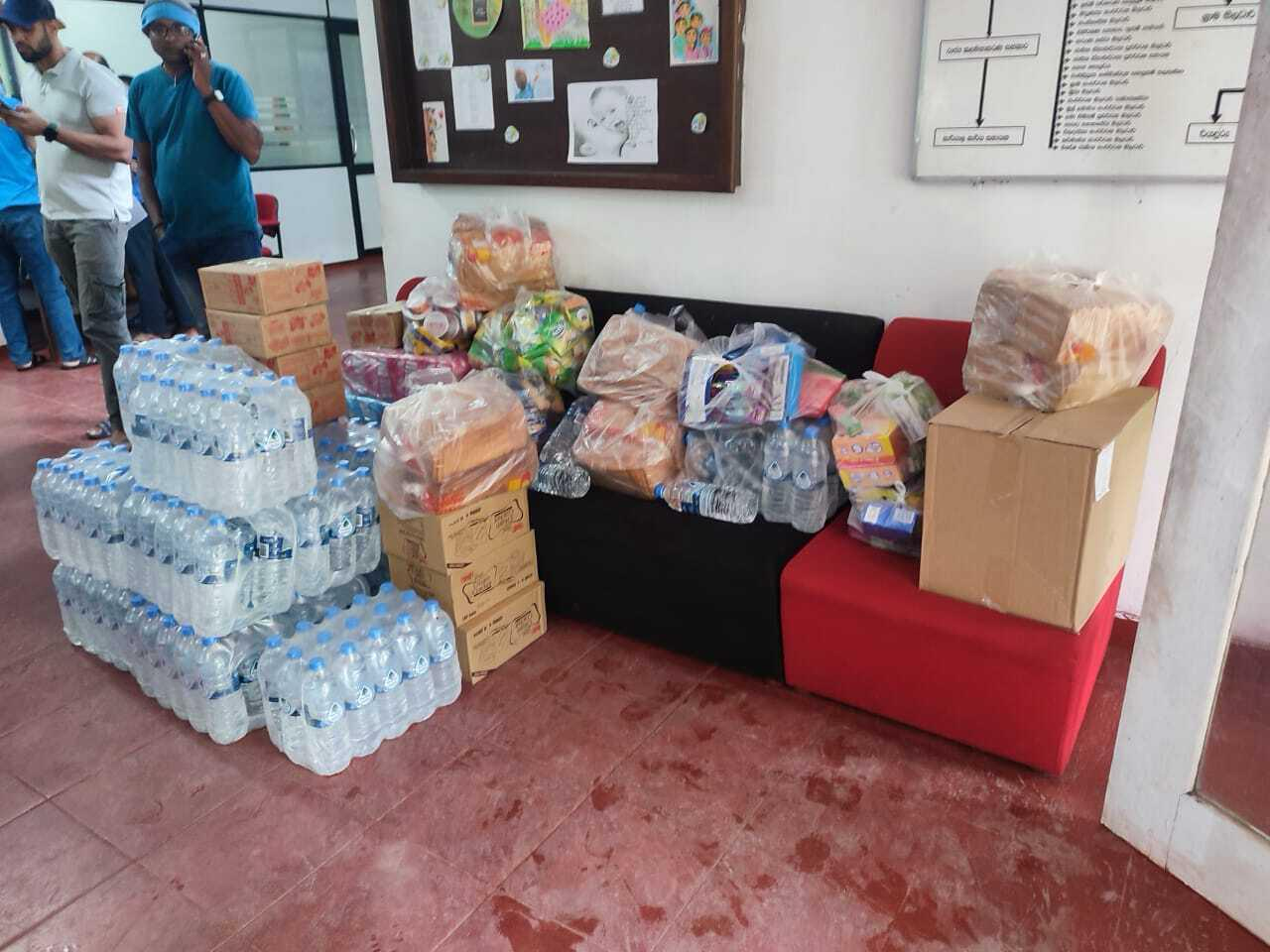
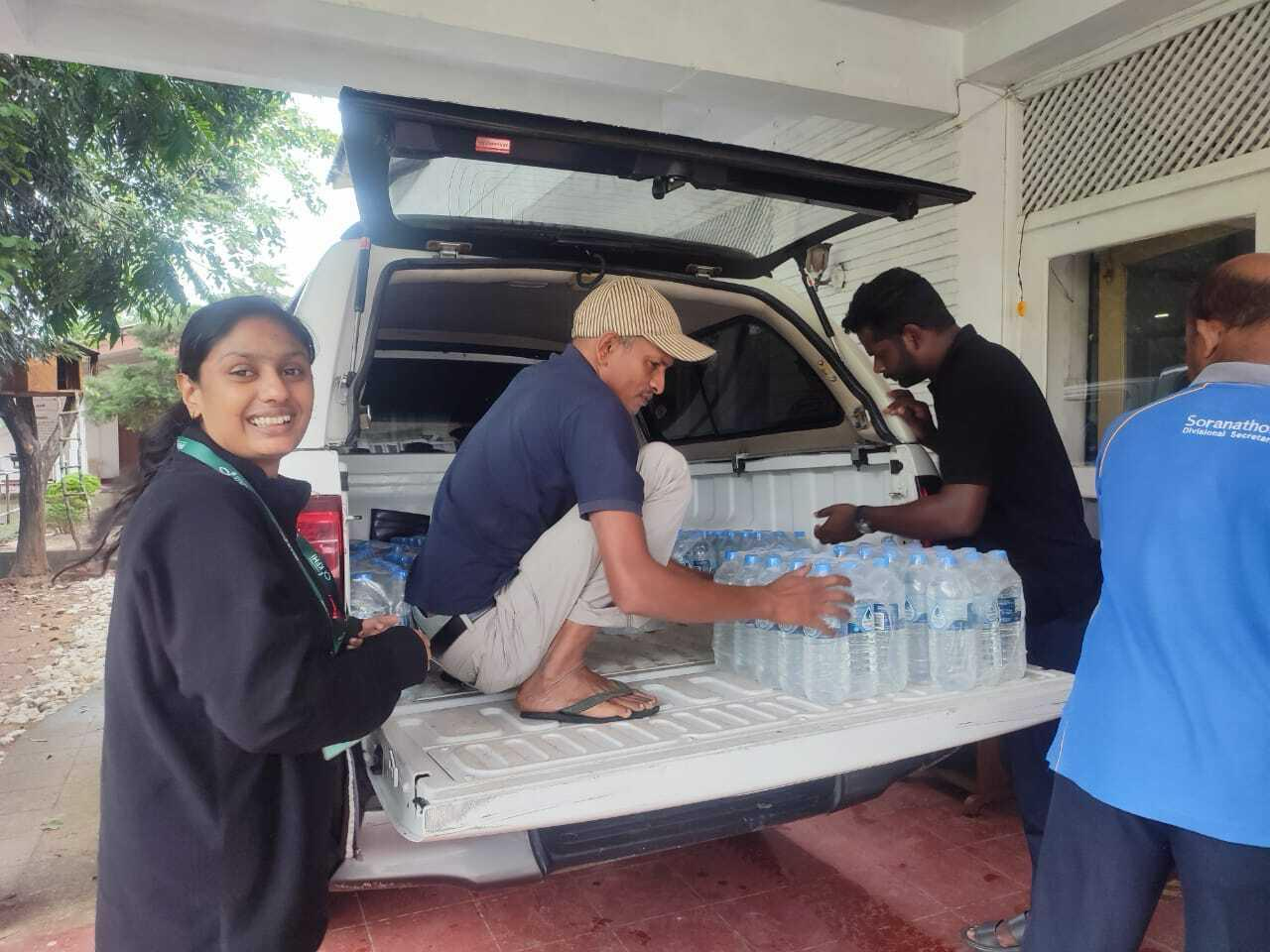
Initial Response
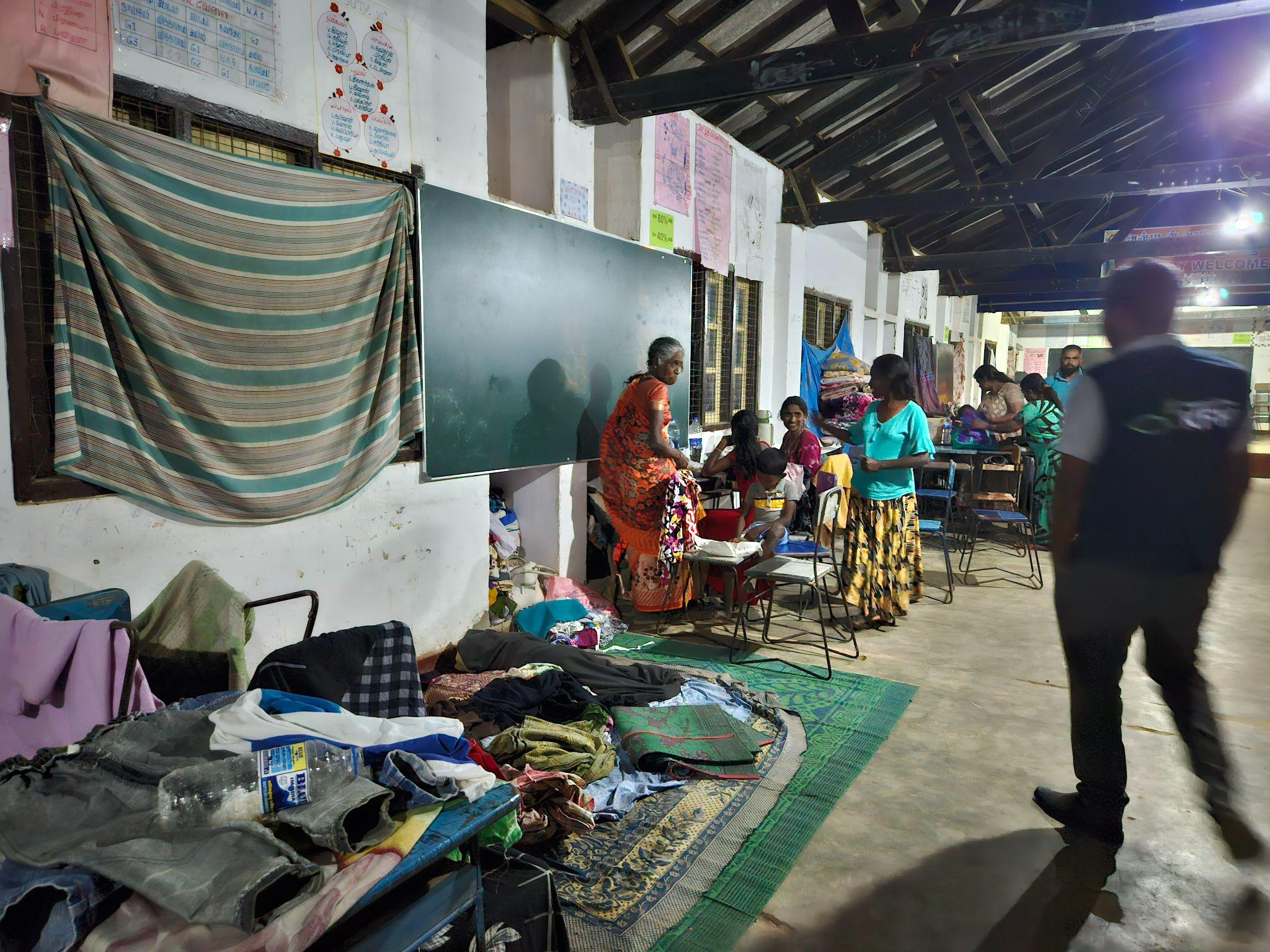
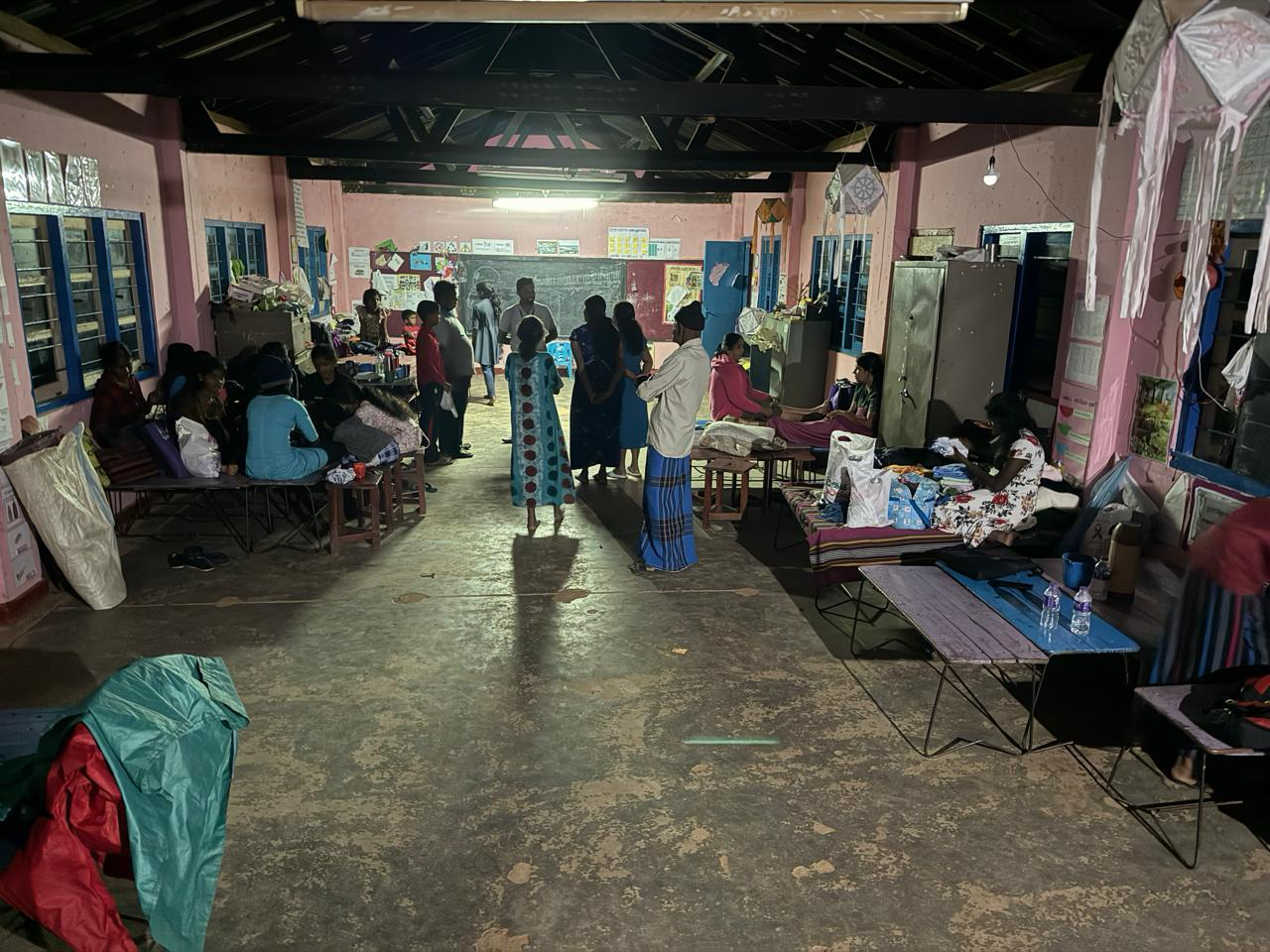
Soranathota Shelter (School)
A. Emergency Relief and Infrastructure Restoration
- Water Supply: Replaced damaged PVC pipes to restore water from existing KAFHI tanks to homes in Kirioruwa.
- Energy: Distributed small solar lights to individual households in areas where power restoration is delayed (Budugekanda, Kohana, Pallakanda).
- Winter Supplies: Distributed warm clothing and bedding to the elderly to prevent hypothermia.
- Small Shelters: Provided solar lamps, mats, and hygiene kits to small, marginalized shelters (e.g., under temple eaves) often missed by large-scale aid.
B. Child Protection and Psychosocial Support
- Safety Checks: Confirmed the safety of sponsored children in Soranathota.
- Mental Health: Conducted letter writing and recreational activities to prevent trauma.
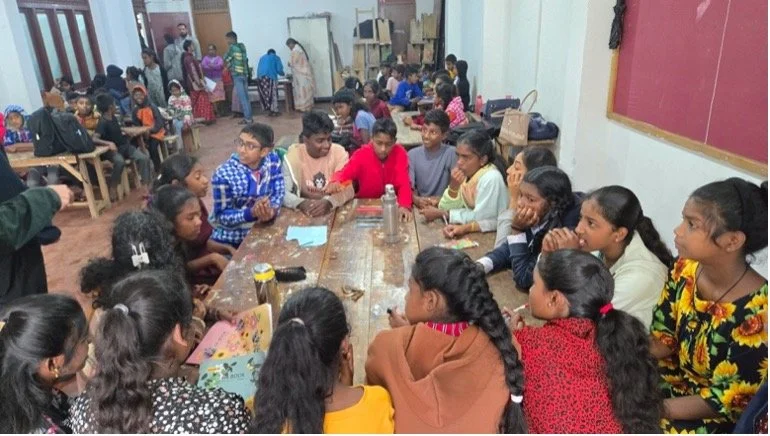
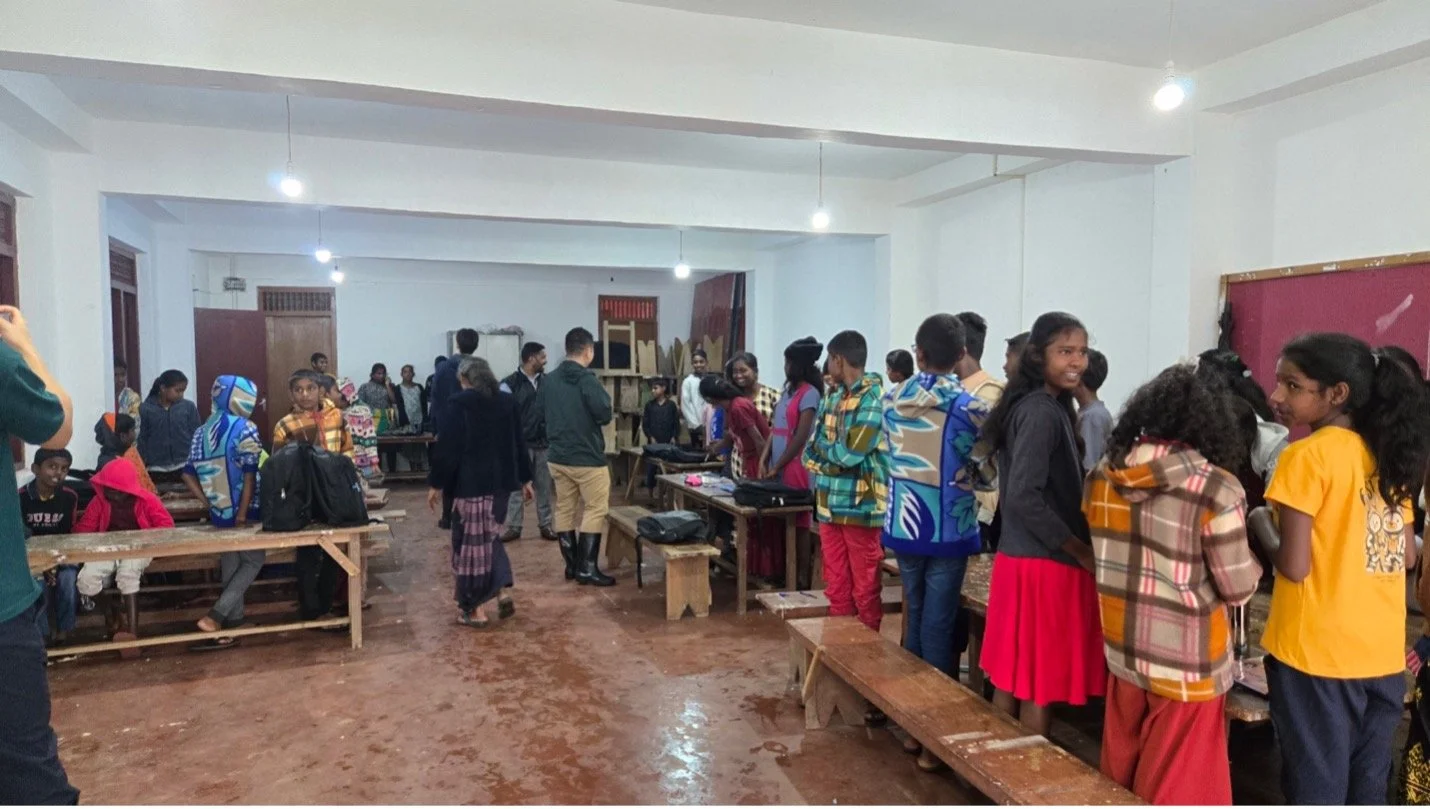
- Education: Operated English after-school classes within shelters to ensure the right to learn during school closures.
C. Future Plans
- Hygiene Facilities: Support the construction of gender-segregated toilets and showers for those moving from school shelters to temporary tent settlements. This will follow a community-based model where KAFHI provides materials and residents provide labor.
- Housing Stabilization: Monitor government policy and provide settlement supplies (kitchenware, food) for families moving to temporary residences.
- Holiday Support: 2025 Christmas gifts have been rescheduled for early 2026, consisting of school supplies and solar lamps.
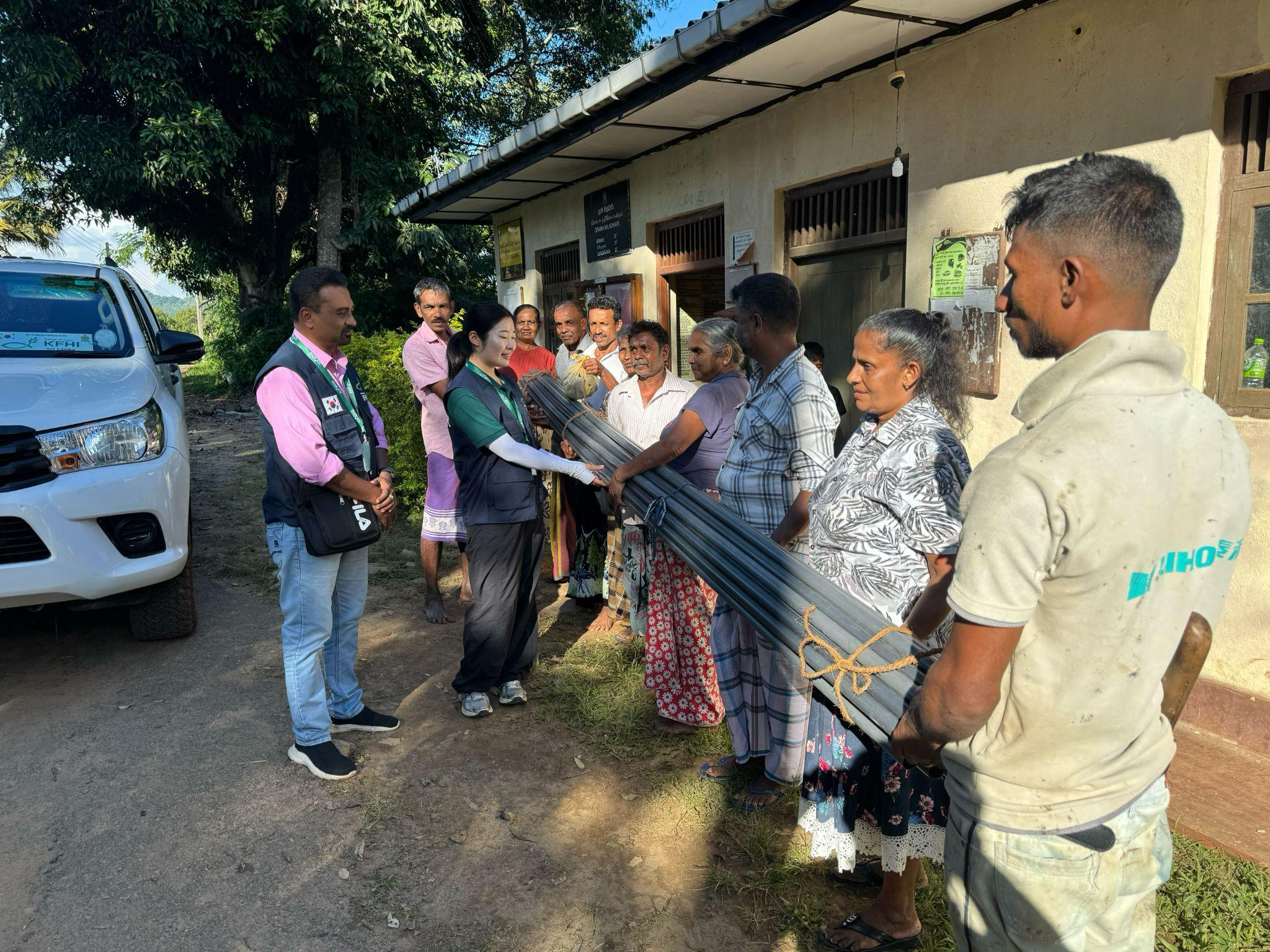
PVC Pipe Distribution
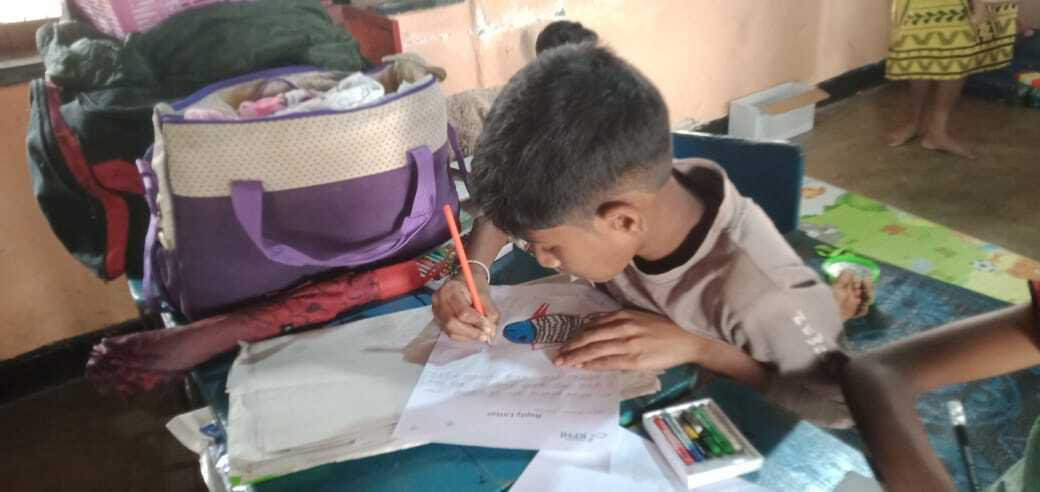
Educational Support within the Shelter
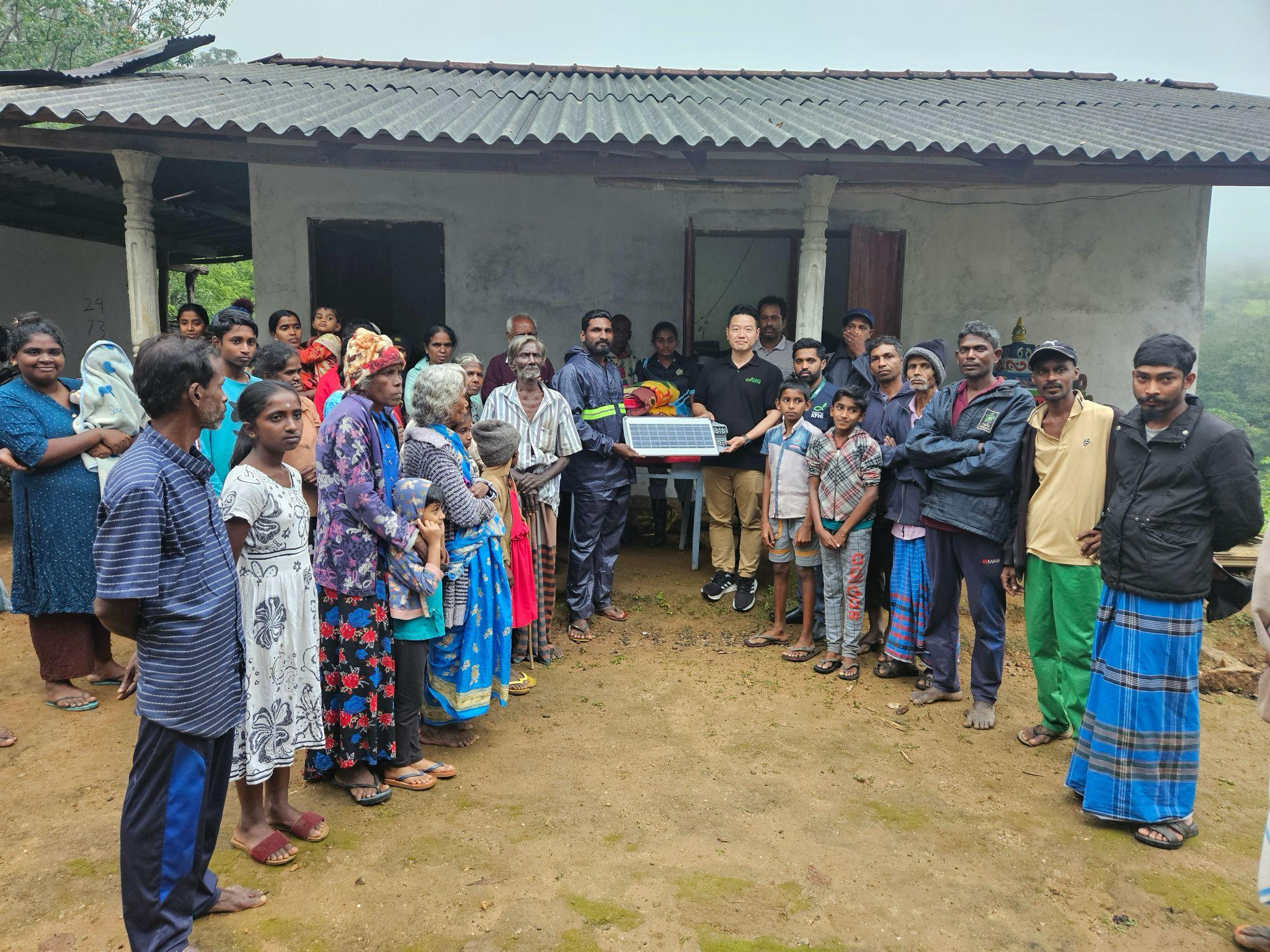
Solar Panels Delivered to the Shelter
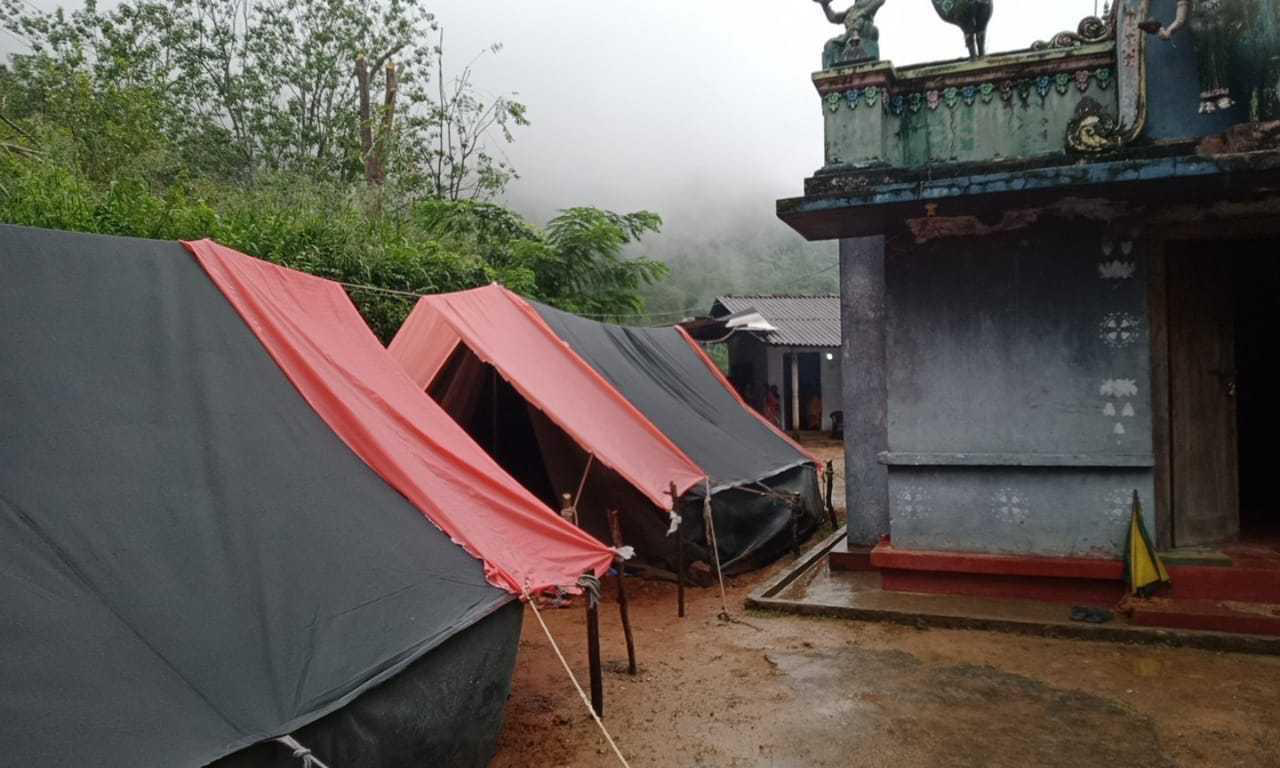
View of the Temporary Tent Shelter
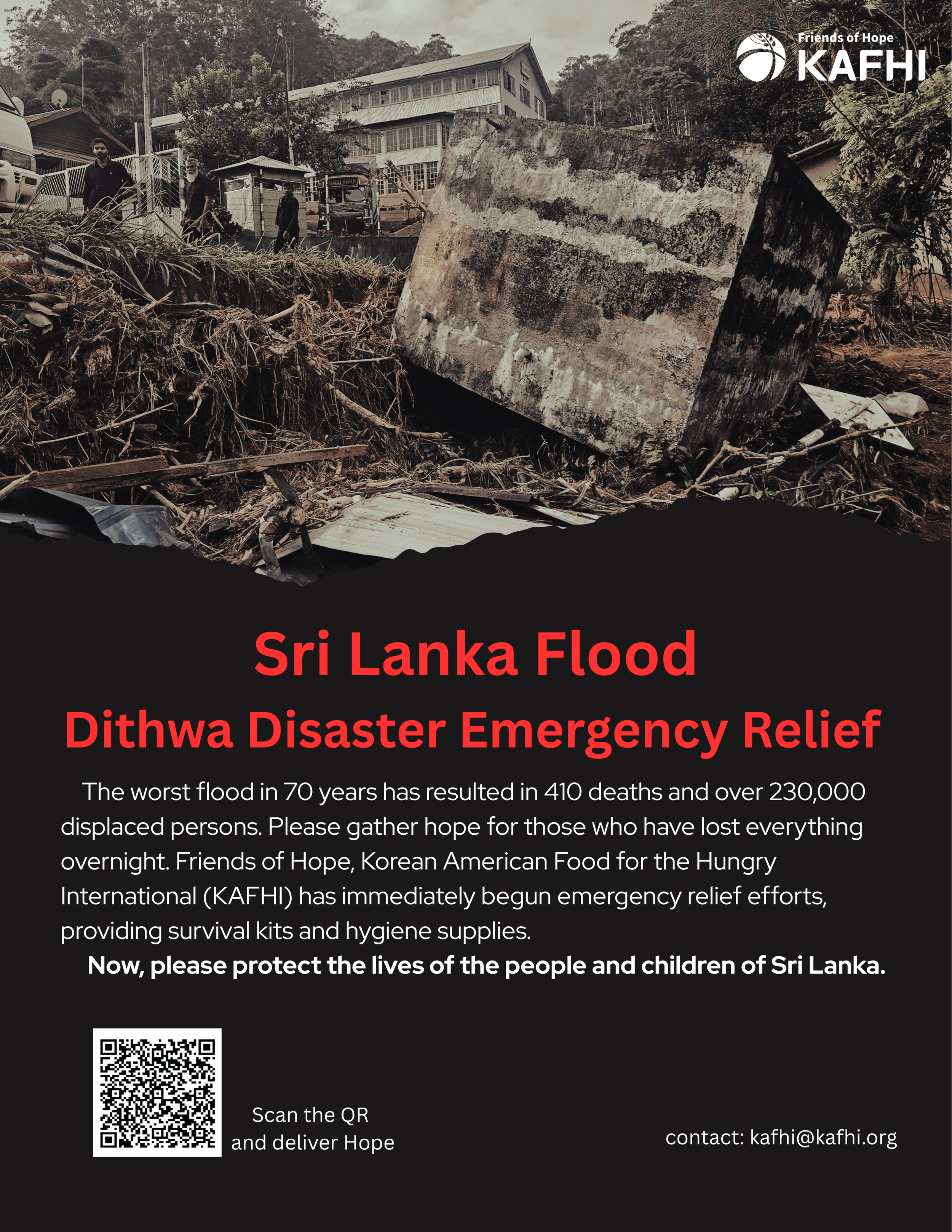
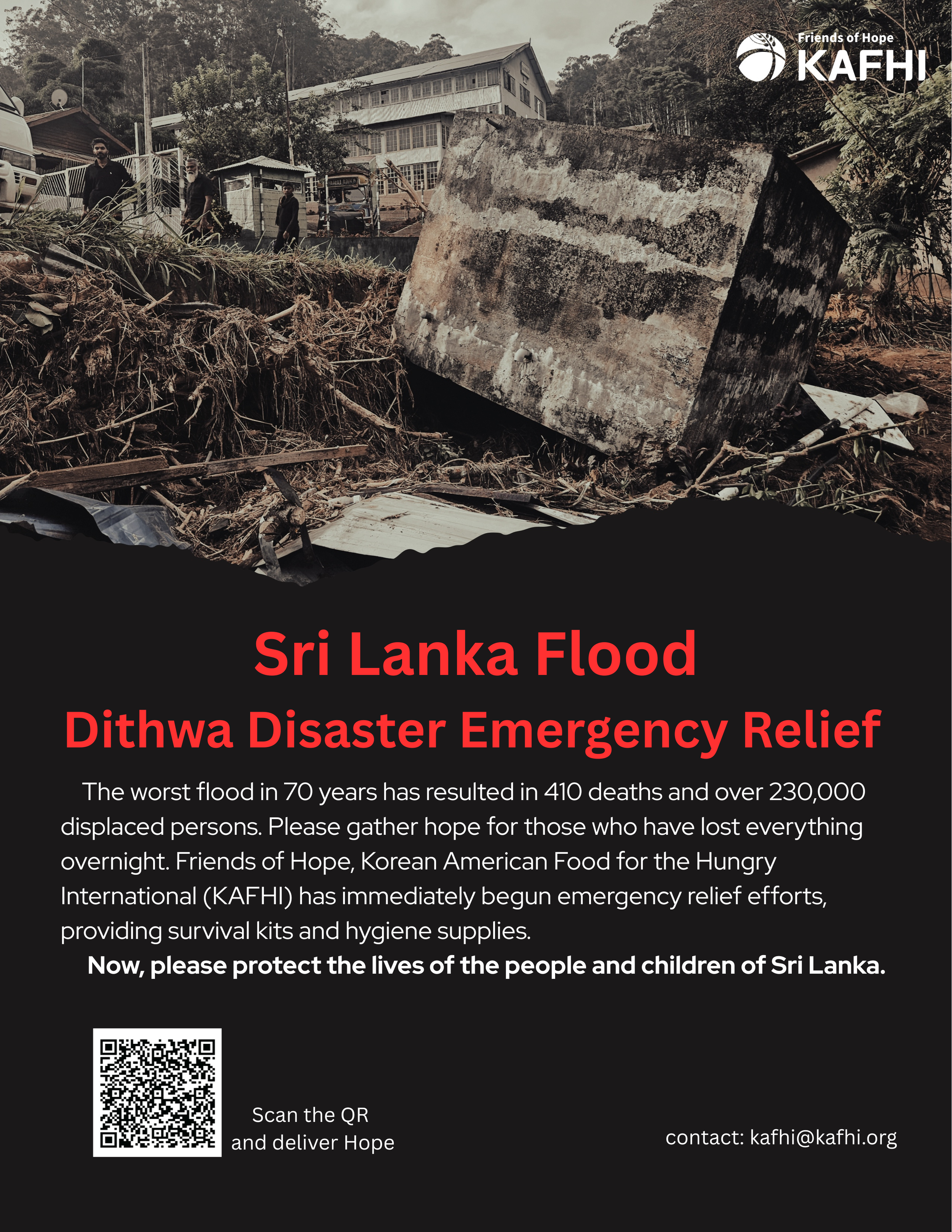
Sri Lanka's worst-ever flood disaster
On November 27 (local time), Cyclone Dithwa struck across Sri Lanka, rapidly spreading with strong winds and torrential rain, causing widespread devastation that has resulted in a dire need for emergency relief. As of the current count, the disaster has tragically claimed the lives of 410 people, with 336 individuals reported missing, and has displaced over 230,000 people, marking it as the largest disaster among the floods and landslides recorded in the country over the past 70 years.
In the Badulla region, where Korean American Food for the Hungry International’s (KAFHI) project site is located, the village of Soranathota, a mountainous area, experienced concentrated damage from heavy rainfall and ground collapse. The damage toll within the village currently stands at 10 confirmed deaths and 9 people missing, with 1,481 residents from 712 households evacuated to shelters. Fortunately, there have been no confirmed deaths or injuries among the sponsored children. Large-scale landslides continue to occur across various areas due to Cyclone Dithwa, and although the rain temporarily subsided from the afternoon of November 29, the risk of further collapse remains ongoing.
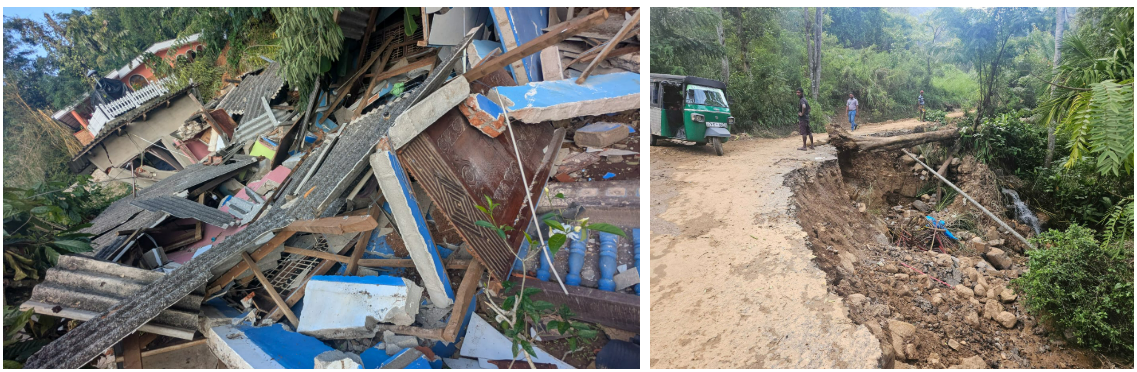
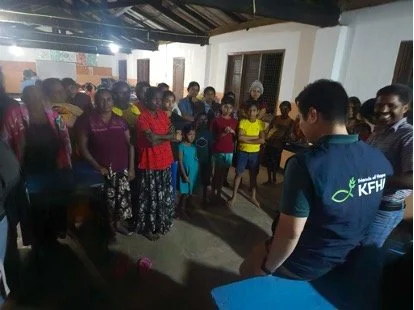
Approximately 750 displaced persons are currently residing in the temporary shelters established in partnership with Korean American Food for the Hungry International (KAFHI). KAFHI plans to gradually expand the scope of support, reaching smaller shelters throughout the region to assess the needs of children.
"Will we be able to go back home once the rain stops..." The voices heard from residents on the ground are filled with worry and fear.
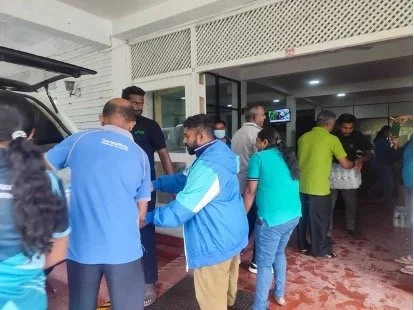
Immediately following the disaster, KAFHI has been providing relief supplies, food, and hygiene kits, and is working closely with the local government to assess the situation in the affected areas.
Please Protect the Lives of the Children, Now.
Your generous donations will be delivered as Emergency Relief Kits consisting of food, bottled water, basic medicines, and hygiene items.